
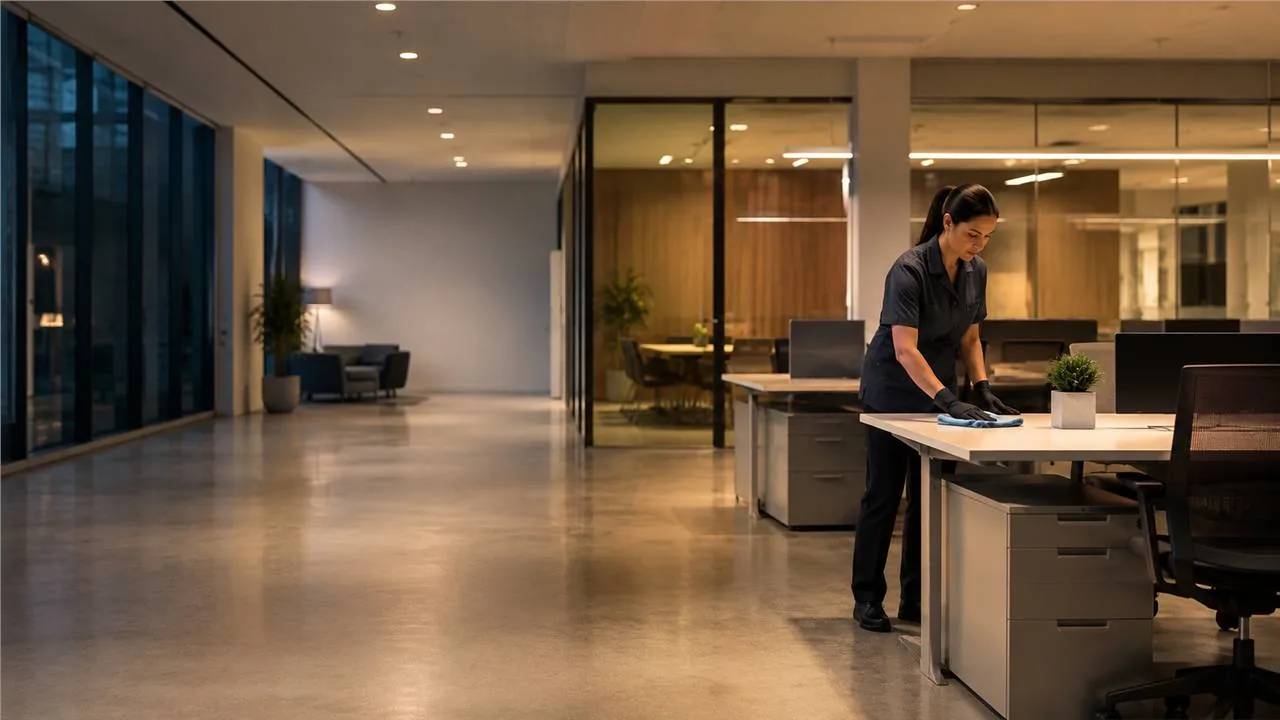
Disinfection that happens every visit, not when someone asks.
Most of what gets called disinfection is actually just wiping
There is a real difference between cleaning, sanitizing and disinfecting, and it is not marketing. Cleaning removes soil. Sanitizing reduces bacteria to a level considered safe. Disinfecting kills a specified list of organisms on a hard surface, and it only counts if the product is EPA registered and left wet on the surface for the contact time printed on its label.
That last part is where almost all of it falls apart. A crew that sprays and immediately wipes has cleaned the surface, not disinfected it, because the product never had the time it needs. Limpio treats disinfection of high touch points as a line in the scope of work with its own method, not as something extra that happens when a client asks for it.
What we disinfect on every visit
The surfaces that get touched by everyone, every day.
Door Handles & Push Plates
Entry doors, restroom doors, meeting rooms and anything with a handle between two people who do not share a desk.
Light Switches & Controls
Switches, thermostats, elevator buttons and access panels. Small surfaces, touched constantly, missed almost always.
Shared Equipment
Printers, copiers, badge readers and the keypad on the door. Every one of them is a surface the whole floor uses.
Break Room Touch Points
Fridge handle, microwave keypad, coffee machine, cabinet pulls and the tap. The highest traffic surfaces in most offices are in the kitchen.
Restroom Fixtures
Taps, flush handles, dispensers and stall latches, disinfected as part of the restroom service rather than as a separate visit.
Correct Contact Time
Product left wet for the dwell time on its label before wiping. Without that step it is cleaning, and cleaning is a different thing.
Contact time is the whole job
Every EPA registered disinfectant has a contact time printed on the label, usually somewhere between thirty seconds and ten minutes depending on the product and the organism. The surface has to stay visibly wet for that long. Spray and wipe in one motion is the single most common failure in this industry, and it is invisible: the surface looks exactly the same either way.
We follow label directions on every application, which sometimes means the product sits while the crew works on something else and comes back. It is slower and it is the only version that does what the word means.
The other half is sequence. Disinfecting a surface that still has soil on it does very little, because the product binds to the dirt instead of the surface. So the area gets cleaned first and disinfected second, always in that order. You never see any of this happen, and that is the point: you get a building where the shared surfaces are handled without it becoming a topic.
From first email to your first clean
The same simple process behind every Limpio account.
Walkthrough
We visit your space in person and scope exactly what needs covering.
Custom plan
After the visit, you get a written quote and schedule by email, so every scope, change and price stays in writing from the start.
First clean
From the first cleaning, everything is done to your standards.
Ongoing care
Scheduled visits keep your space consistently clean, with spot-checks built in and a written satisfaction warranty on every visit.
Common Questions
What is the difference between cleaning, sanitizing and disinfecting?
Cleaning removes visible soil with detergent and friction. Sanitizing reduces bacteria to a level considered safe on food contact surfaces. Disinfecting kills the specific organisms listed on an EPA registered product label, and only when the surface stays wet for that product’s contact time. All three have a place and they are not interchangeable.
Do you use EPA registered disinfectants?
Yes, and we apply them according to the directions on the label, including contact time and the surfaces they are approved for. That is not a preference, it is how the products are legally required to be used.
Is disinfection an add on service or is it included?
It is included. High touch point disinfection is written into the standard scope of work for every account, so it happens on every visit without anyone requesting it. See our office cleaning and janitorial services.
Do you offer electrostatic spraying or fogging?
For most offices it is not necessary. Fogging covers area quickly but does not replace physically cleaning a surface first, and the contact time rules still apply. We would rather do the touch points properly on every visit than treat the whole room occasionally.
Get the touch points handled.
Leave your work email. We walk your space, identify the surfaces your team actually shares, and send a written scope and pricing by email. No obligation, and one less thing you have to remember to ask for.